
Service · Standing seam & metal systems
Metal roofing built for mountain weather
Metal sheds debris, sheds snow, will not burn, and lasts two to three times longer than asphalt. In a region with dense tree cover, heavy rain, ice dams at elevation and a post-Helene wildfire fuel load, that combination is hard to argue with. Here is what actually separates a good metal roof from a cheap one.
Standing seam vs. exposed fastener
This is the decision that matters most, and it is worth understanding before anyone quotes you a number.
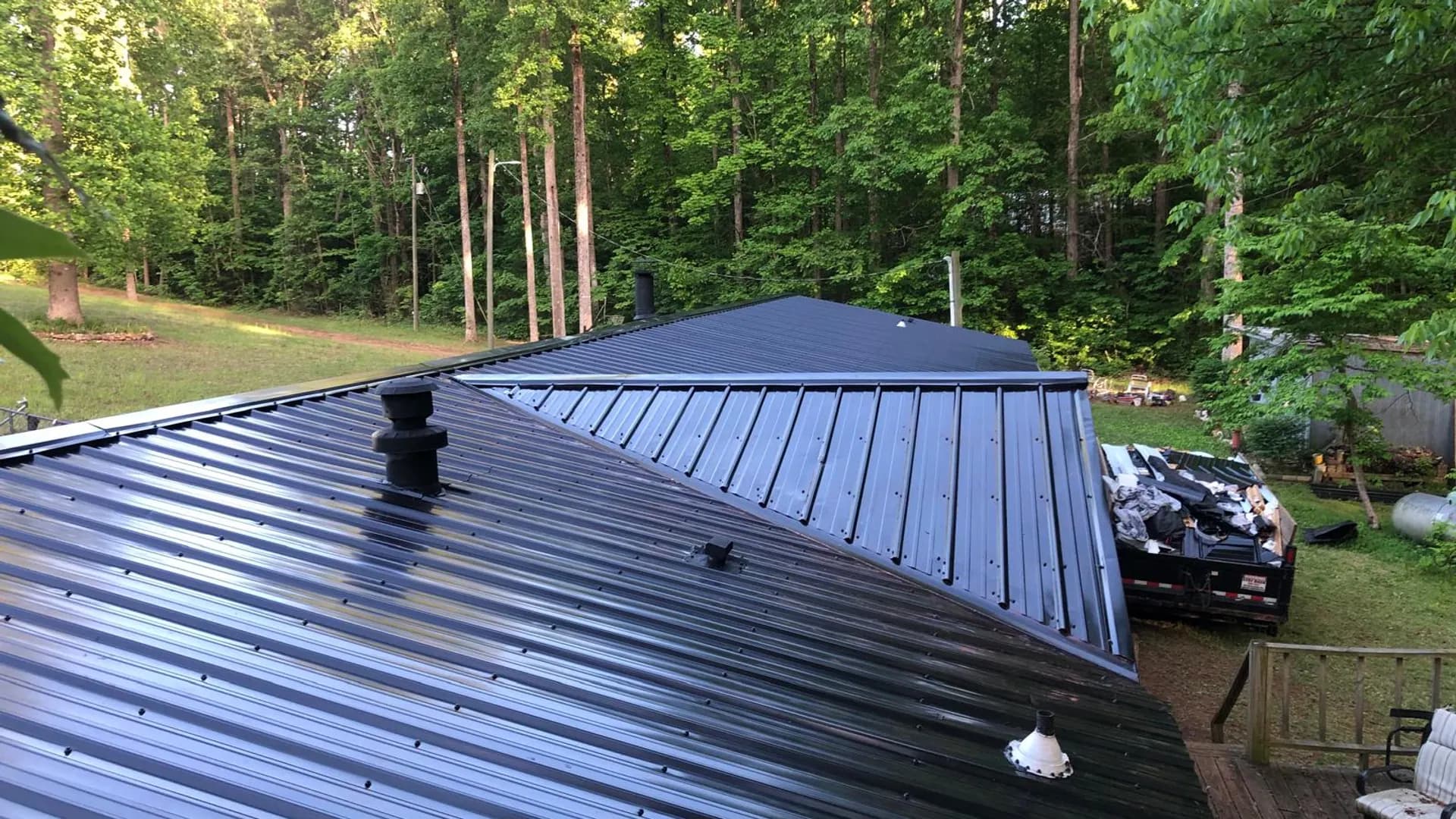
Exposed-fastener panels — sometimes called through-fastened or R-panel — are screwed directly through the metal into the deck. The screw heads and neoprene washers are visible. They cost meaningfully less, install faster, and they work. The catch is that every screw is a hole through the weather barrier, and metal expands and contracts with temperature. Over years of that cycle the screws back out, the washers harden, and you get a maintenance obligation: periodic re-tightening and eventual replacement.
Standing seam panels have raised ribs that conceal the fasteners underneath. The panels attach with clips that let the metal float as it expands and contracts, rather than fighting it. There are dramatically fewer penetrations, it handles low slopes down to 1:12, it takes solar mounting without new holes, and it looks like what most people picture when they picture a metal roof. It costs more and it takes a crew that knows what they are doing.
Our honest position: if the budget reaches, standing seam is the better long-term buy in this climate, particularly above 2,500 feet. Exposed-fastener is a legitimate choice on outbuildings, on lower-visibility slopes, and when the budget is the constraint — as long as you go in understanding the maintenance.
Why metal makes sense in Western NC specifically
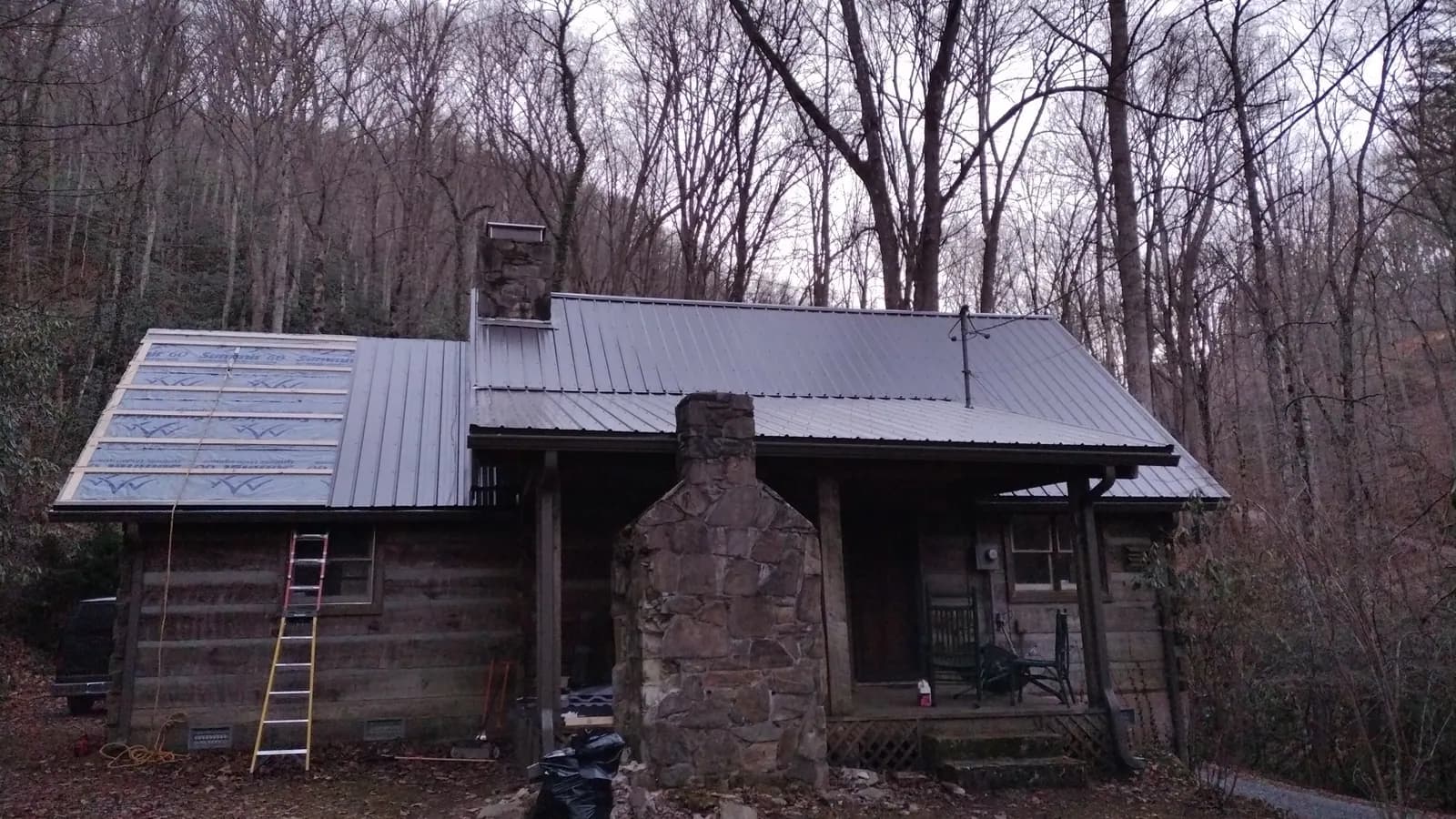
Three regional factors push the case for metal harder here than they would in a flatter, drier market.
- Debris shedding. Under WNC tree cover, an asphalt roof holds needles and leaf litter in its texture. That organic material holds moisture against the surface and grows moss. Metal sheds it.
- Snow and ice. Metal sheds snow load rather than accumulating it, which reduces ice dam formation. Paired with a snow retention system it drops in a controlled place rather than onto your walkway.
- Fire. Hurricane Helene left an enormous fuel bed of damaged timber across the region, and North Carolina already ranks first nationally for acreage inside the wildland-urban interface. Metal is non-combustible and Class A rated inherently, and its debris-shedding property removes the fuel that embers land in.
The details that decide whether it lasts
Metal is unforgiving of a sloppy install in a way asphalt is not. These are the things we specify and the things worth asking any other bidder about.
- Deck flatness. Metal telegraphs every irregularity underneath as visible waviness — "oil canning". We correct uneven sheathing before a panel goes down.
- Clip type and spacing. Floating clips, correctly spaced for panel length, are what allow thermal movement. Fixed attachment on a long panel run will buckle it.
- Paint system. A Kynar 500 / PVDF finish holds colour and resists chalking for decades. Cheaper polyester finishes fade noticeably inside ten years, and it is not a difference you can see on the sample board.
- Panel fabrication. We order panels cut to exact length — and roll standing seam on site where the run calls for it — so there are no unnecessary transverse seams.
- Underlayment. High-temperature synthetic underlayment, because the cavity under metal gets hot enough to degrade standard product.
What about the noise, and the other things people ask
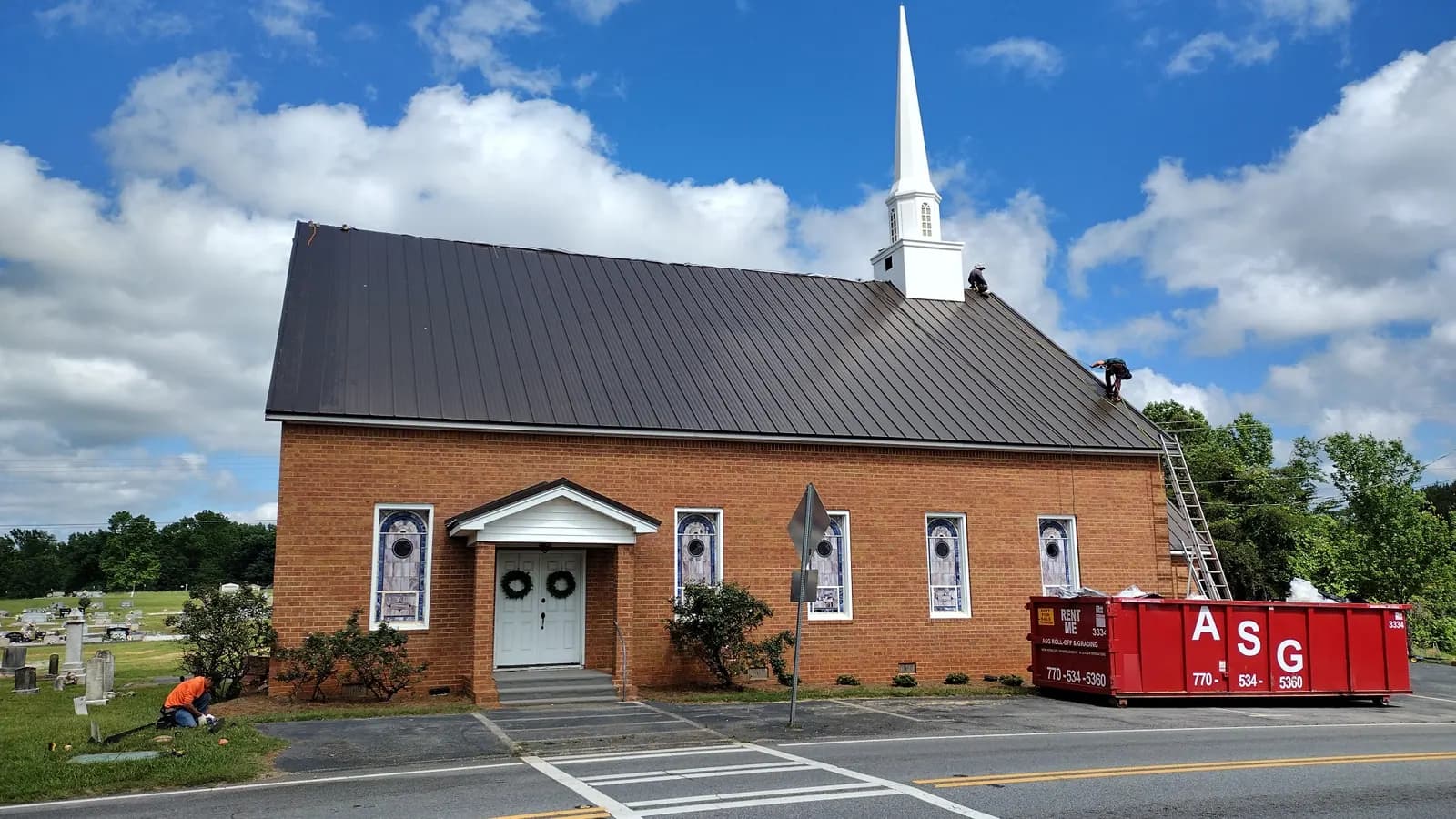
Modern metal installed over solid decking and underlayment is not appreciably louder in rain than asphalt. The loud-metal-roof reputation comes from barn roofs screwed to open purlins with nothing underneath.
Metal does not attract lightning. It is non-combustible and, if struck, disperses the charge rather than igniting.
Metal does not make the house hotter. Reflective coatings send a significant share of solar radiation back, which in most cases lowers summer cooling load.
| System | Installed cost / sq ft | Lifespan | Maintenance |
|---|---|---|---|
| Exposed-fastener steel | ~$4.50–$8 | 30–40 yrs | Periodic screw re-tightening; washer replacement over time |
| Standing seam steel | ~$8.50–$16 | 40–70 yrs | Minimal — inspect flashings and sealants periodically |
| Aluminium standing seam | Varies | 50+ yrs | Corrosion-proof; well suited to high-moisture exposure |
| Copper | ~$30–$50 | 100+ yrs | Effectively none; develops natural patina |
Costs include material and labour. Complexity, panel gauge, finish system and access all move these figures.
If you live in an HOA or covenant community
Highlands, Cashiers, Lake Toxaway and Balsam Mountain all restrict metal in different ways — some prohibit it on primary roofs entirely, some require pre-patinated copper on accessory roofs, some cap the pitch it can go on. Bring us the covenant before you fall in love with a profile. Where metal is not permitted, Class A synthetic slate or shake usually satisfies both the review board and the fire rating.
Common questions
Not when installed over solid decking with underlayment. The noise reputation comes from agricultural roofs fastened to open purlins with nothing underneath them.
Often yes, if the deck is sound and the structure can carry the added weight. We inspect the decking and ventilation first. Our default recommendation is still tear-off, because covering the deck means not seeing it.
No. Metal does not increase strike probability. It is non-combustible and disperses charge safely if struck.
Steel standing seam runs 40–70 years with proper installation. Copper exceeds a century. The failure point is almost always a badly executed detail, not the metal itself.
In this climate, above about 2,500 feet, we think yes — the hidden fasteners remove the leak risk and the maintenance obligation entirely. Below that, on a budget, a well-installed exposed-fastener roof is a legitimate choice as long as you plan for periodic screw service.
Standing seam is the best roof surface there is for solar. Mounting clamps grip the seam without any new penetrations, so the array does not compromise the roof.
Next step
Talk through metal options for your roof
We will bring samples, look at your roof structure and covenants, and give you a line-itemed comparison against staying with asphalt.
- Free, with no obligation and no fee
- Photo-documented report you keep either way
- Three line-itemed options — never a single lump sum
- Lifetime Craftsmanship Warranty on our workmanship
- We never waive insurance deductibles